


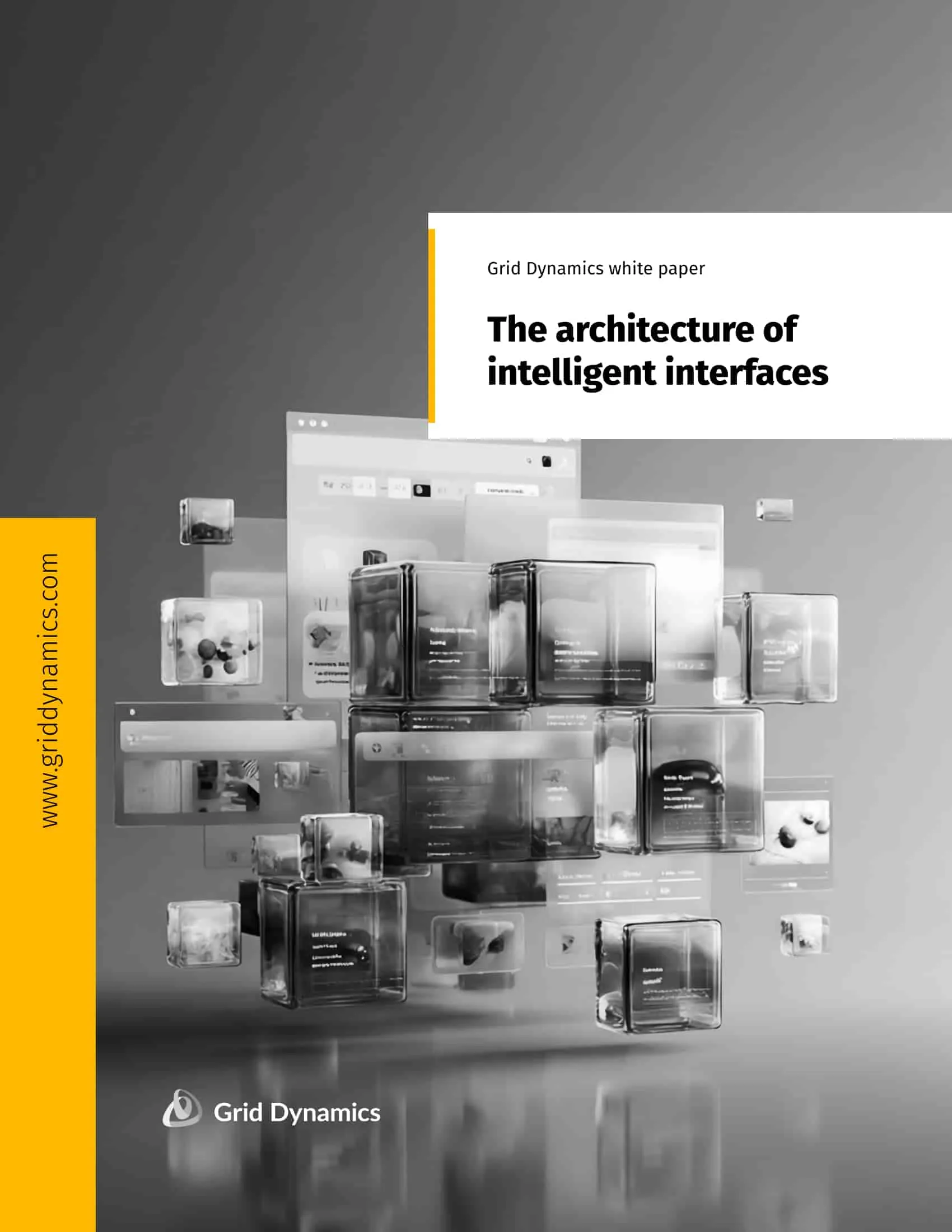
Intelligent interfaces: Why this architecture matters now
Intelligent interfaces are changing how applications are designed and built, moving from fixed screens to systems that can restructure themselves around the way people actually work. Instead of just swapping content, intelligent user interfaces can decide which components appear, how they are arranged, and when they adapt as context changes.
The shift from personalization to intelligent user interfaces
Traditional personalization tweaks content inside a static frame; intelligent interfaces let AI reshape the frame itself. This white paper explains how AI-driven UI moves from simple recommendations to structural decisions about layout, flow, and interaction, so software adapts to users rather than forcing users to adapt to it. It also shows where this power is useful, where it is risky, and what it demands from your design, engineering, and QA practices.
Core patterns in AI-driven UI
You’ll see a clear taxonomy of intelligent user interfaces: generative UI that assembles new layouts, adaptive UI that selects from well-defined variants, and UI built specifically for monitoring and controlling AI agents. Concrete examples connect these patterns to systems inspired by Vercel’s generative pipelines, Netflix-style adaptive layouts, and emerging oversight interfaces for agents operating on users’ behalf.
Schemas, runtime, and safety for intelligent interfaces
A central section shows why naive code generation breaks down and how schema-based design makes AI-driven UI reliable in production. The paper walks through declarative schemas for structure, data, and actions; a runtime that handles validation, reactive data binding, and streaming updates; and safeguards to prevent AI-driven layout changes from clashing with live user actions. You also get practical guidance on observability, audit trails, constraint checks, and rollback strategies so intelligent interfaces stay understandable and controllable at scale.
Download the full white paper for detailed schemas, runtime diagrams, event flows, and step-by-step implementation guidance you can plug into your architecture.
Authors
You might also like