



There is no longer any doubt that Generative AI (GenAI) in wealth management is more than a fleeting trend. It’s already reshaping front, middle, and back-office operations, from customer service and Financial Advisor assistance to risk prevention, compliance, and sophisticated backend process automation.
In the front office, FAs are relieved of much of the manual heavy lifting that slowed them down before. They use GenAI to craft hyper-personalized financial strategies, tailor portfolios to individual needs, and employ fine-tuned AI models to simulate market conditions and generate insights into risks and opportunities to inform investment decisions.
According to the 2026 Forrester Predictions, more than half of US and UK adults seeking financial advice will turn to GenAI tools.
In the middle office, GenAI is quietly removing the friction and delay from trade processing and reporting. For example, one large US wealth management firm uses AI models to digest trade details and automatically generate the required paperwork and documentation needed for middle office processing and record keeping. Another firm uses a trained open-source large language model (LLM) to extract raw data from client accounts, holdings, transactions, etc., and automatically generate customized performance reports, billing statements, tax documents, and other repetitive, time-sensitive reporting tasks.
The most significant beneficiary of GenAI is the back office function. A host of wealth management firms now use generative Question Answering (QA) systems over rule-based QA systems to extract information from unstructured data like scans, emails, and paperwork, as well as structured tabular data such as client accounts, transactions, and holdings. Others use GenAI to classify sentiment in client conversations and interactions beyond predefined categories, helping advisors detect early signs of dissatisfaction and intervene proactively.
One of our clients, a Fortune 500 wealth management firm, deployed a GenAI-driven QA assistant based on their proprietary data, market updates, and regulatory advisories.
According to the latest Gartner Hype Cycles for AI adoption in finance, three areas are expected to deliver significant impact and reach mainstream use within the next two years: Generative AI in finance, Composite AI, and Responsible AI.

Gartner analysts predict that as GenAI tools continue to evolve alongside techniques that enhance model reliability, finance functions will see a broader range of practical applications and increased accessibility across different teams. Enterprises that have already deployed at least one AI use case are looking to add an average of 10 more, and 56% plan to invest 10% more on AI initiatives in the next two years. Let’s explore the generative AI use cases in wealth management that matter most today.
Generative AI use cases across the wealth management lifecycle
Wealth management runs on a client lifecycle that starts with acquisition and onboarding, moves to personalized financial planning and trade execution, and relies on continuous intelligence to adapt and grow. At each stage, generative AI for wealth management reduces manual effort, accelerates workflows, and delivers tailored insights that keep clients informed and engaged.
The challenge: Client acquisition and onboarding
Client acquisition and onboarding are the foundation of the wealth management lifecycle. They’re also paperwork-heavy and resource-intensive bottlenecks. Lengthy questionnaires, repeated data requests, and slow documentation cycles frustrate prospects and increase the burden and cost of front-office operations. Financial advisors must piece together information from disparate systems, interpret financial histories, and prepare compliance-ready onboarding packages under tight timelines, rather than spending time on understanding client goals and building relationships. The need for a faster, smoother onboarding process is evident, as is the need for personalized, timely client interactions.
The solution: GenAI acquisition and onboarding assistant
GenAI-powered conversational assistants become your always-on onboarding partner. AI assistants collaborate with FAs to analyze client financial history and generate relevant onboarding documentation with personalized investment recommendations. It walks prospects and new clients through eligibility questions, product discovery, data capture, and document upload in natural language, reducing abandonment and the back-and-forth typically experienced through email or PDF forms.
- Rapid data retrieval: GenAI systems can collect and consolidate client data from multiple sources, including financial records, investment history, and risk assessment profiles. For instance, if a client has multiple investment accounts, AI can swiftly aggregate data from each account for a unified view.
- Automated client profiling: With a consolidated dataset, GenAI builds an initial client profile that blends financial goals, risk tolerance, liquidity needs, and behavioral patterns. For example, if a client consistently chooses low-volatility investments, the system updates these signals into the profile and gives advisors a clearer starting point for discussion.
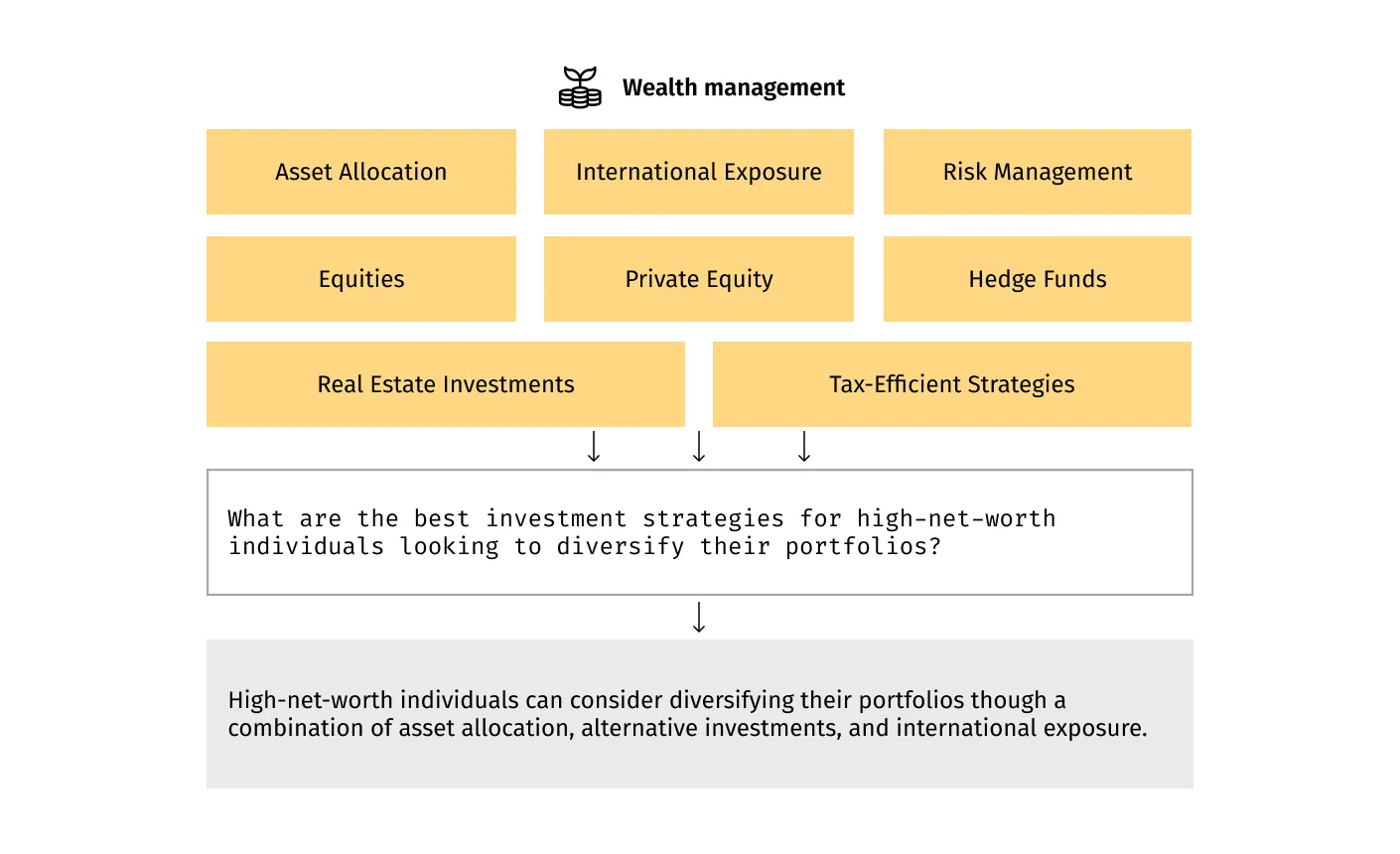
- AI-assisted initial financial planning: Based on the client profile, GenAI suggests suitable financial plans and investment strategies. These plans are designed to align with the client’s unique goals, optimizing asset allocation and investment recommendations. For example, a high-net-worth individual may need a specific investment strategy to diversify their portfolio.
- Automated document generation: GenAI also generates onboarding materials, including investment proposals, risk assessments, and compliance disclosures. This reduces back-and-forth with operations teams and ensures forms are complete, accurate, and policy-aligned. E-signature flows and digital submission checklists can be embedded directly into the experience to minimize delays.
- Contextual memory across interactions: Throughout acquisition and onboarding, GenAI maintains a record of prior conversations, decisions, and expressed preferences. When advisors re-engage with clients, they can quickly surface relevant context, such as a stated interest in sustainable investments. This consistency strengthens trust in early relationships.
Explore how AI automates document processing and evaluates investment suitability
READ THE BLOGThe challenge: Personalized investment decision-making
After onboarding a client, the front office plays a key role in ensuring client satisfaction and engagement. However, it’s easier said than done. Financial advisors struggle to craft tailored investment strategies to fit each client’s unique financial goals, risk tolerance, and preferences. Moreover, sifting through the overwhelming volume of financial data to extract valuable insights, run scenario analyses, and deliver personalized investment recommendations is time and resource-intensive. Human advisors find themselves swamped with laborious, repetitive tasks such as data collection and report generation, leaving little room for those high-impact discussions that build trust.
The solution: GenAI for personalized investment decision-making
In the front office, generative AI introduces a new way for advisors to deliver suitable investment recommendations. An LLM-driven knowledge assistant surfaces insights on demand to help FAs craft strategies aligned with each client’s goals and risk preferences.

- Data-driven insights at scale: GenAI models can process large volumes of market data, research reports, historical performance metrics, and macroeconomic indicators. By highlighting patterns and emerging trends, these systems help advisors ground their recommendations in comprehensive, timely analysis.
- Scenario simulations for clearer decision paths: Another practical capability of GenAI is to simulate multiple investment paths using a client’s unique risk profile, time horizon, and cash-flow needs. Advisors can explore conservative, moderate, or growth-oriented strategies and show clients how each scenario may behave under different market conditions. This builds transparency and supports more informed decision-making.
- Hyperpersonalized recommendations at scale: Furthermore, GenAI evaluates diversification needs, surfaces undervalued assets, and identifies opportunities across sectors and geographies. By considering factors such as liquidity preferences, tax sensitivity, and long-term objectives, the model helps advisors develop strategies aligned with each client’s priorities rather than generalized templates.
- Efficiency through automation: Data gathering, performance summaries, and reporting are essential but time-consuming tasks. GenAI automates much of this operational effort, giving advisors more time for client conversations, portfolio refinement, and ongoing monitoring.
Client success story: Knowledge AI for front-office advisors
Grid Dynamics developed an LLM-enabled knowledge assistant for a top-tier U.S. wealth management firm. The assistant helps advisors navigate diversification strategies, explore sector-specific opportunities, and stay current on regulatory updates. By drawing on internal research, proprietary data, and market information, it delivers contextual guidance that supports more precise, timely recommendations. This allows advisors to spend less time searching for information and more time advising clients.
The challenge: Trade confirmations & reporting
When a client is ready to trade the financial markets, the wealth management middle office springs into action. The clock starts ticking as the client submits a trade request, and every second counts as the middle office team quickly gathers vital trade documents.
Each document requires meticulous scanning for accuracy and compliance checks to avoid costly regulatory pitfalls. The trade document is sent to the client for review and e-signature, and the trade is executed.
As the client’s investment journey progresses, the middle office assumes responsibility for producing performance reports, billing statements, tax documents, and other recurring updates. These reports rely on detailed client data, including account profiles, holdings, transactions, and tax information, which must be collected, validated, and converted into clear, personalized outputs.
In practice, both trade processing and report creation demand significant manual effort. The high level of accuracy and customization required in wealth management often makes these workflows slow, resource-intensive, and prone to operational bottlenecks.
The solution: GenAI automated trade confirmations and report generation
In the middle office, GenAI automates and accelerates trade processing, document creation, and reporting, sharply reducing manual work. As AI handles most documentation and reports, teams can shift their attention to higher-value tasks, resolving complex trade issues, improving processes, and strengthening client service.

- Intelligent trade detail extraction: Middle office teams no longer need to comb through trade tickets, emails, PDFs, and execution systems. GenAI models can extract trade attributes from structured and unstructured inputs.
- Automated paperwork generation: Once trade details are captured, GenAI can auto-generate confirmations, settlement instructions, compliance documents, and client-specific disclosures. Templates are dynamically populated with validated data, giving advisors and clients faster access to accurate paperwork.
- Efficient reporting workflows: Generative AI also automates the creation of performance summaries, billing statements, tax documents, and other recurring reports. It processes large volumes of client data, interprets it correctly, and produces customized outputs that reflect each client’s needs. This boosts middle office operational efficiency while delivering a smoother, more informed client experience.
- Robust compliance and recordkeeping: Beyond documentation, GenAI supports the audit and compliance posture of wealth management firms. All generated materials, including trade logs, confirmations, communication summaries, and reporting artifacts, can be stored in structured formats, making it easier for teams to retrieve records during audits or internal reviews. This improves transparency and helps standardize middle-office workflows across teams and regions.
The challenge: Business intelligence & sentiment understanding
As the front and middle offices manage client acquisition, investment advice, trade reporting, and day-to-day operations, the back office is responsible for product development, competitive intelligence, market monitoring, and continuous assessment of client needs. To support these functions, teams rely on business intelligence extracted from vast volumes of structured data (performance metrics, transactions, benchmarks) and unstructured content (market research, news, analyst reports, client feedback). They also analyze customer sentiment to inform decisions and drive future product and service improvements.
However, manual review cannot keep pace with expanding document flows, rapid market changes, or the need for near-real-time insights. Generative AI provides the analytical depth and speed required to rewire this intelligence workflow.
The solution: GenAI for business intelligence
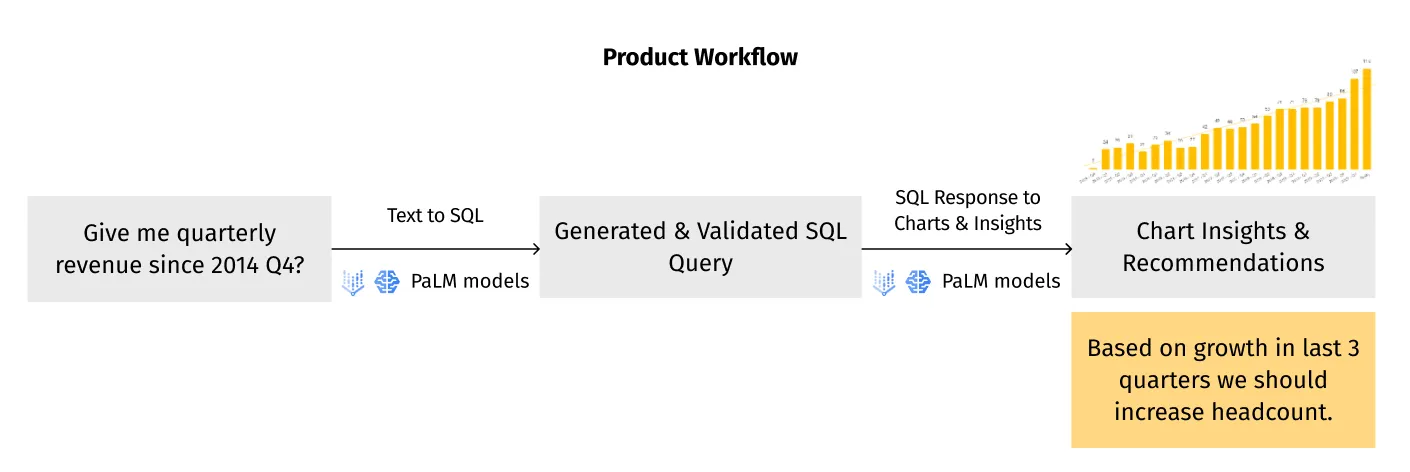
Generative AI addresses the back office’s need to extract intelligence from expanding volumes of structured performance data and unstructured market content while simultaneously analyzing client sentiment to inform product development and strategic decisions. By synthesizing research, regulatory filings, and competitive data through generative Q&A systems, converting natural language queries into SQL for direct access to AUM flows and segmentation metrics, and identifying nuanced sentiment themes from client communications, GenAI gives teams the analytical depth and speed that manual review cannot deliver at scale.
- Fast, contextual intelligence: Generative Q&A systems go beyond keyword search. They read full documents, understand context, and synthesize insights across internal research, regulatory filings, market updates, and competitive data. Instead of surfacing keyword hits, a GenAI system can explain the drivers behind emerging asset classes, assess potential risks, or outline competitor strategies.
- Text-to-SQL for on-demand analytics: GenAI significantly accelerates access to structured data. Text-to-SQL capabilities allow business teams to ask natural language questions like, “show client churn trends by segment over the last 12 months”, and generate accurate queries instantly. Analysts and business leaders can explore complex questions without writing SQL or relying on overburdened BI teams, while governance controls ensure only approved datasets and metrics are used. For wealth managers, this functionality is valuable for quickly slicing AUM, flows, profitability, or risk exposure by advisor, segment, or product line, then drilling into the drivers behind those trends.
- Real-time sentiment analysis across channels: Alongside quantitative metrics, GenAI also helps firms understand what clients are actually thinking and feeling. Instead of simple positive/negative tags, generative models can read emails, call transcripts, chat logs, and survey responses to identify nuanced themes such as anxiety about volatility, dissatisfaction with response times, or growing interest in specific asset classes. Crucially, they can point out the specific issue behind the sentiment, not just label it, which helps teams make informed decisions. During live interactions, AI can even flag emerging frustration or confusion so advisors or service reps can adjust their approach on the spot.
Risks wealth management firms must consider
Generative AI offers clear operational benefits across the wealth management value chain, but it also introduces risks that firms must evaluate carefully. The technology is evolving faster than the regulatory landscape, and the absence of well-defined guidelines creates uncertainty around compliance, governance, and client protection. To deploy GenAI responsibly, wealth management firms need to understand and mitigate the following categories of risk.
Regulatory and compliance risk
Supervisors are moving fast, but dedicated GenAI-specific rules are still emerging across jurisdictions. That leaves wealth managers operating in a grey area where existing expectations on suitability, conduct, operational resilience, and model risk all apply, but without detailed guidance on how to evidence compliance for AI-driven use cases. Regulators have flagged particular concerns around AI-generated misinformation, market manipulation, and opaque products that may be mis-sold or misunderstood by retail clients. If GenAI is used to draft advice, disclosures, or marketing content, even minor inaccuracies or omissions can translate into regulatory breaches, mis-selling risk, or enforcement action.
When regulatory gaps surface, the speed and precision of your data strategy define your risk exposure. See how bitemporal data and AI for regulatory compliance help you detect inconsistencies early, automate remediation, and respond to day-one FINRA and SEC audits.
Hallucinations, bias, and model explainability
Large language models are known to “hallucinate,” producing confident but incorrect statements, which is especially problematic when clients may act on AI-generated explanations, summaries, or recommendations. Studies have also shown that off-the-shelf LLMs can push portfolios toward higher risk profiles than intended, highlighting the danger of using generic models for tailored financial advice without strong guardrails. On top of that, many GenAI systems are effectively black boxes, making it difficult to demonstrate why a particular recommendation was generated, how client data influenced it, or whether protected characteristics played a role, making explainability essential for reliable interactions
Data privacy, security, and synthetic data
Wealth managers work with highly sensitive personal and financial information, so any GenAI solution that ingests or generates client data must meet the strictest privacy and security standards. When training or fine-tuning models on internal data, firms need to prevent the leakage of confidential information into prompts, logs, or shared model instances and to avoid scenarios in which one client’s data might inadvertently influence another client’s output.
Synthetic data offers one mitigation path: by generating statistically realistic but de-identified datasets, teams can test and train models without exposing real client records. However, they should have strong controls to ensure that the synthetic data cannot be re-identified. Even then, encryption, access control, data minimization, and robust vendor due diligence remain non-negotiable.
Technical instability and model risk
Beyond content quality, GenAI models bring classic model risk issues in new forms. Overfitting, training instability, and “mode collapse” can all degrade performance, especially if firms attempt to build or heavily customize generative models in-house without mature MLOps practices. Continual learning setups can suffer from “catastrophic forgetting,” where models lose important behaviors when updated with new data, unless designs incorporate techniques such as vector-based memory or controlled retraining.
How firms can deploy GenAI safely (RAG + LLMOps)
Wealth management firms do not have to choose between innovation and control when deploying generative AI. Retrieval-Augmented Generation (RAG) and mature LLMOps practices give you a way to keep models grounded in your own data, wrapped in guardrails that satisfy risk, compliance, and security demands.
Why grounding matters: RAG as the default pattern
Out-of-the-box models are powerful but prone to hallucinations and gaps, especially on niche financial products, house views, and local regulations. RAG changes this by forcing the model to “show its work” against your own trusted sources before it generates an answer. In a RAG architecture, the system first retrieves relevant documents, including research reports, product term sheets, portfolio guidelines, or regulatory texts from approved repositories, and only then asks the model to summarize or reason over that content. This keeps outputs tied to up-to-date, domain-specific information rather than whatever was in the model’s pre-training corpus.
For wealth managers, that means client-facing and advisor tools can answer questions like “How should we reposition this portfolio for a soft-landing scenario under our latest CIO outlook?” using your current capital markets assumptions, internal playbooks, and product shelf without retraining the base model every time assumptions change. It also simplifies audit and supervision because responses are grounded in specific retrieved passages; you can inspect which documents were used, how they were combined, and whether the answer stayed within approved boundaries.
Example scenario:
Consider a client in their mid-40s planning for early retirement while seeking diversification during volatile markets. A RAG-enabled advisor workstation can pull the client’s historical allocations, current exposures, constraints, and market research. The system then generates a recommendation grounded in verified data, avoiding risks such as mode collapse, overfitting, or unstable behavior common in generative-only models. Advisors get a defensible, data-linked recommendation aligned with the client’s objectives.

LLMOps: guardrails, governance, and observability
RAG alone is not enough; firms also need disciplined operations around large language models, often referred to as LLMOps. This combines the ideas of MLOps and DevOps with AI-specific controls so you can manage models as critical infrastructure rather than point experiments.
Key capabilities include:
- Guardrails at runtime: Policies that screen and shape outputs in real time. These can include blocking disallowed topics (unsolicited individualized investment recommendations in self-service channels), enforcing tone and disclosure rules, checking that responses are grounded in retrieved documents, and rejecting answers with low confidence or missing citations.
- Safety and compliance filters: Layers that detect potentially harmful, biased, or misleading content and route edge cases for human review rather than letting them reach clients directly. This is especially important for anything that could be interpreted as advice, a suitability assessment, or a product comparison.
- Security and privacy controls: Anonymization or tokenization of personal data before it reaches the model, strict segregation between environments, and protection against prompt injection attacks that could cause the system to ignore controls or leak sensitive information.
- Monitoring and auditability: Telemetry, logging, and replay capabilities allow you to see how the system behaves over time, spot drift or emerging failure modes, and reconstruct specific interactions for internal audit or regulatory queries.

Conclusion: Unlocking the value of generative AI
Generative AI offers measurable gains across the wealth management value chain, from faster advisor workflows to higher-quality insights and more consistent client experiences. But these benefits only materialize when firms deploy GenAI responsibly. This means selecting the right model architectures, grounding them in governed AI-ready data, enforcing strict operational guardrails, and validating outputs before they reach advisors or clients. Precision, auditability, and security must remain non-negotiable.
Grid Dynamics helps wealth management firms through this transition with production-grade GenAI architectures, robust RAG and LLMOps frameworks, and domain-specific accelerators built for compliance-heavy environments. With the right foundation, your teams can safely modernize front, middle, and back-office operations, improve decision quality, and scale new AI-driven capabilities with confidence.
If you’re ready to explore where GenAI can deliver the most impact in your firm, we’re here to help you move from experimentation to trusted enterprise adoption.
Authors
You might also like